Your customer intelligence, queryable by any AI agent
Feedier's MCP server gives Claude, ChatGPT, and internal copilots direct, permissioned access to your customer intelligence layer. No exports, no copy-pasted context, no standing full-access grant.
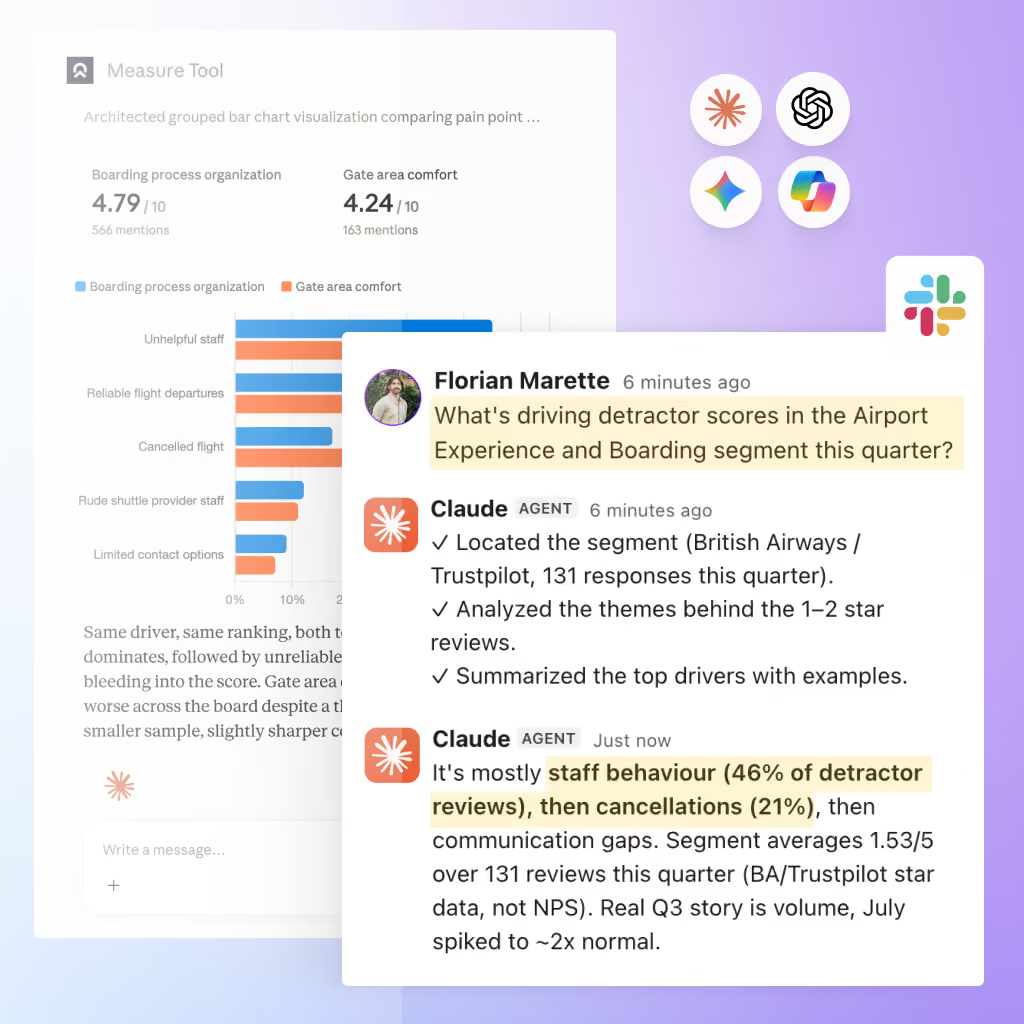
Running inside complex, multi-market organizations







What the connection actually gives you
Four differences between an agent with MCP access and one you're pasting exports into.
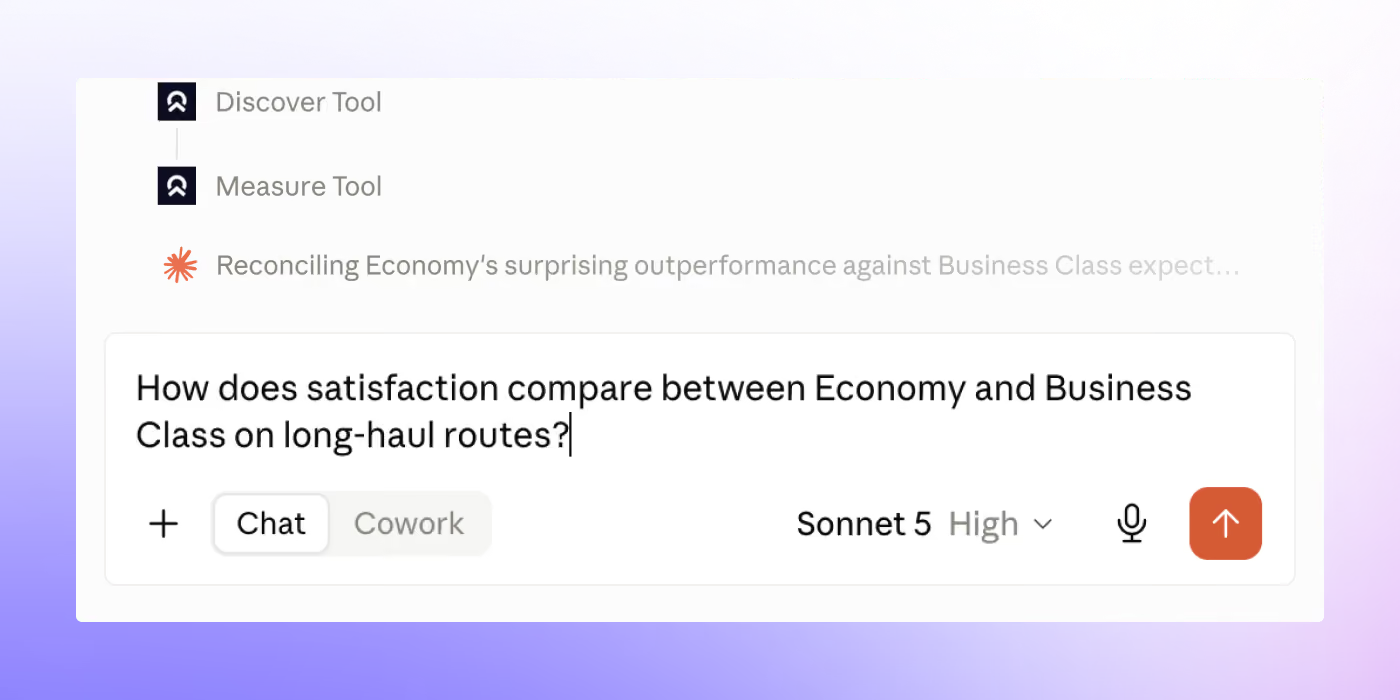
Ask in plain language
{scope} turns "Business Class passengers through Heathrow last quarter" or "detractors mentioning baggage handling" into a precise filter. No query language to learn.
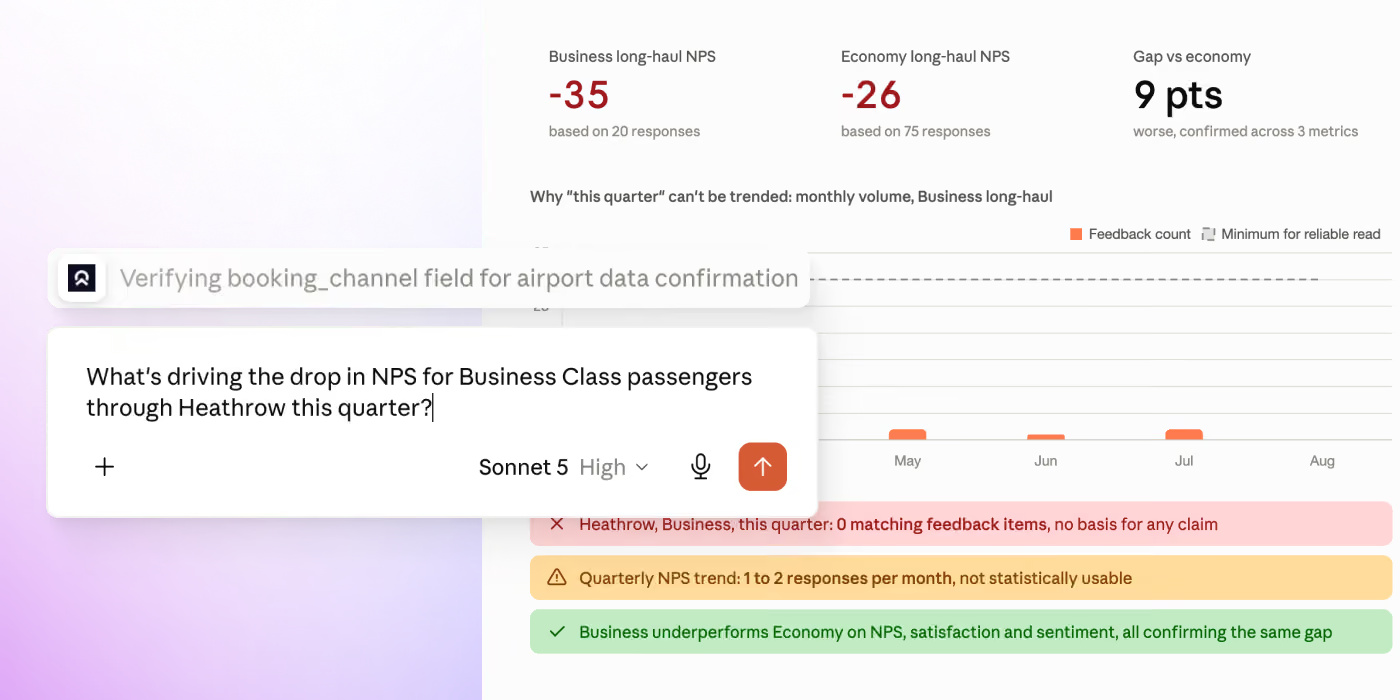
Get evidence, not a summary
{measure} computes the KPI itself, NPS, CSAT, CES, sentiment, or feedback volume, with up to two breakdowns, and {explore} returns the verbatims that explain it. One connected flow, not two disconnected tools. Traceable back to source, same as the reports your team already builds.
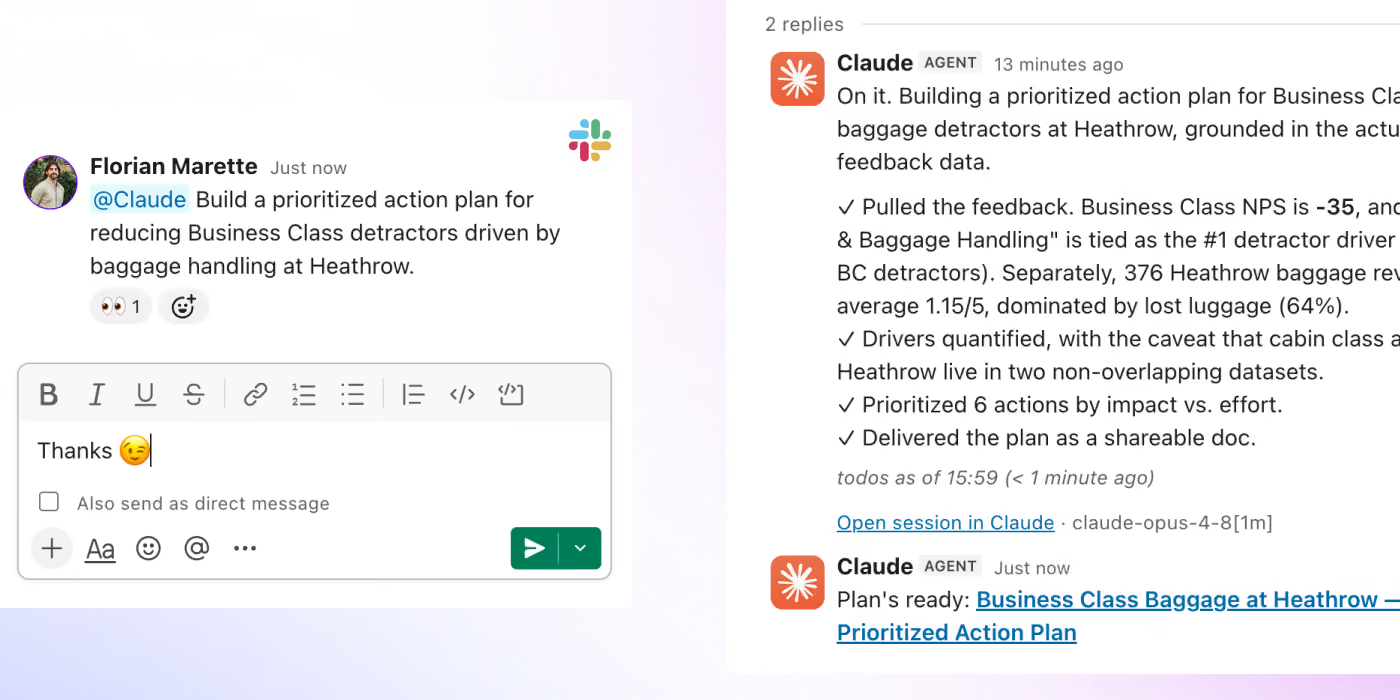
Turn a finding into an action plan
{generate-action-plan} produces a prioritized plan scoped to whatever the agent just found, ready for a team to review and own.
Read and write are separately permissioned
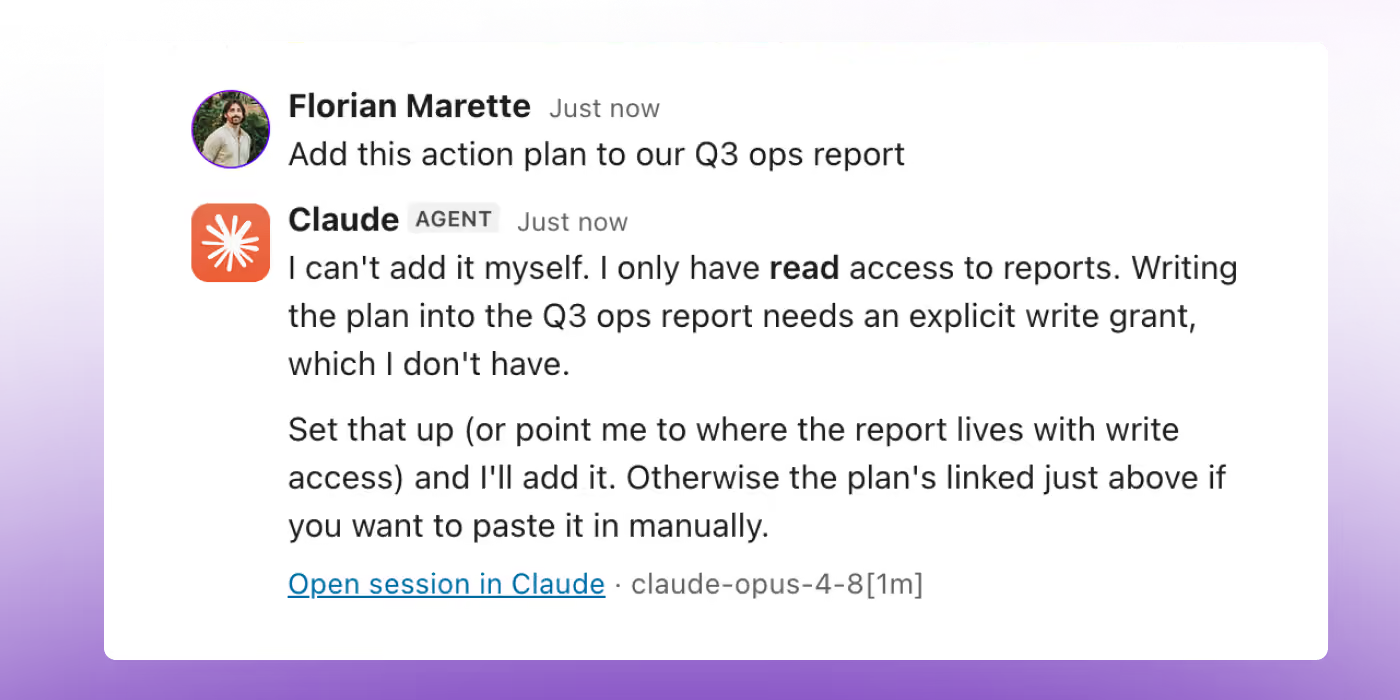
An agent can be given access to query your customer intelligence without any ability to modify a report. Adding to a report requires an explicit, distinct grant. You decide what's read-only.


How the Feedier MCP server works
Three calls turn a plain-language question from Claude, ChatGPT, or any AI agent into a scoped answer, grounded in the same customer intelligence data your team already reports on.
Plain language, exact scope
An agent's question, like "detractors mentioning baggage handling," resolves through {scope} into the same attributes, topics, and segments your team already uses. No query syntax, and no mismatch between what the agent means and what your taxonomy actually contains.
The number and the evidence behind it
{measure} computes the KPI itself (NPS, CSAT, CES, sentiment, or feedback volume) with up to two breakdowns, then {explore} pulls the verbatims that explain the result. Every figure traces back to the individual response that produced it.
A finding becomes
an action
{generate-action-plan} turns a scoped finding into a prioritized plan a team can review and own. Adding it to an existing report requires a separate write permission, so exploration and reporting stay under different, deliberate grants.
Your access is scoped with Feedier
Read-only by default. Write, separately granted. No standing full access.
Every permission is explicit, nothing assumed. Test the connection with {ping} before granting access to anything real.
Frequently asked questions
A general-purpose AI model has no persistent structure. Every session starts over: no taxonomy, no segment definitions, no memory of what "detractor" or "premium" means for your business. Feedier's MCP server gives the agent that context already built, validated by your team, and current, instead of re-explaining it in every prompt.
Only if you grant the write scope explicitly. By default, MCP access is read-only against your customer intelligence layer.
Any MCP-compatible client: Claude, ChatGPT, Copilot, and internal agents built on the same standard.
What CX teams using Feedier have to say

"Feedier connects quantitative and qualitative data with business data. When NPS drops, I know why, so show directors get real arguments, not just scores."
Ly Dinh
Customer Research & Insights Manager


"Our sales employees were able to mark the customers in their system. We're also returning the KPIs and the individual reports to Salesforce. This is for me, a big support."
Jörg Hassler
Corporate Director Marketing & Commercial Excellence


"We're saving probably 100 hours a month of effort across the organization."
Adam Catlow
Head of Analysis and Insight
The podcast for CX leaders who are done with theory
Real conversations with the people actually transforming customer experience inside large, complex organizations. No frameworks. No fluff. Just what works.
.png)


Your competitors have the data, you'll have the advantage
Feedier reads every customer signal you already collect and turns it into decisions your leadership can act on. In hours, not quarters. Without replacing a single tool you own.